
Medical disclaimer: This article is for educational purposes only and is not medical advice. Orexin antagonists are prescription medications used to treat insomnia. If you're considering one of these medications, talk with your healthcare provider about whether it's appropriate for your situation.
Most conversations about sleep peptides end with a familiar conclusion: the biology is fascinating, but the evidence isn't strong enough to support their routine use for insomnia.
Orexin is the notable exception.
Rather than becoming another experimental peptide sold online with bold promises and limited human evidence, orexin research followed a different path. Scientists first identified orexin as one of the brain's key wake-promoting signaling molecules. That discovery eventually led to a completely new class of prescription insomnia medications designed to block the wake signal itself.
It's an elegant idea.
Older sleeping pills generally work by broadly slowing activity in the central nervous system. Orexin antagonists take a different approach. Instead of pushing the brain toward sedation, they reduce the activity of a system specifically responsible for keeping you awake.
That distinction has made orexin antagonists one of the most significant advances in insomnia medicine in decades.
Today, three dual orexin receptor antagonists (often shortened to DORAs) are approved for treating insomnia: suvorexant (Belsomra), lemborexant (Dayvigo), and daridorexant (Quviviq). Across large randomized clinical trials and multiple meta-analyses, these medications have consistently helped people fall asleep faster, spend less time awake during the night, and sleep longer than those receiving placebo.
They're prescription medications that aren't appropriate for everyone, but they represent an important milestone in sleep science.
If most sleep peptides remain experimental, orexin biology became real medicine.
Orexin: The Peptide That Helps Keep You Awake
Sleep isn't controlled by a single "sleep switch." Instead, it's the result of several systems constantly balancing one another.
One of the most important promotes wakefulness.
That system relies on two closely related neuropeptides called orexin-A and orexin-B, also known as hypocretins. Produced in the hypothalamus, orexin neurons send signals throughout the brain to help stabilize alertness, attention, motivation, and wakefulness.
During the day, orexin activity helps prevent unwanted transitions into sleep while supporting sustained attention and normal levels of alertness. As bedtime approaches, activity within this system naturally declines, allowing other sleep-promoting processes to take over.
Scientists came to appreciate orexin's importance through narcolepsy.
People with narcolepsy type 1 lose most of the neurons that produce orexin. Without that stabilizing wake signal, the boundary between sleeping and waking becomes much less stable, leading to excessive daytime sleepiness and other classic symptoms of the condition.
That discovery provided an intriguing insight.
If losing orexin causes excessive sleepiness, could temporarily blocking orexin at night help people with insomnia sleep more naturally?
The answer turned out to be yes.
The Elegant Idea: Block the Wake Signal
For decades, most prescription sleeping pills worked by enhancing the activity of gamma-aminobutyric acid (GABA), the brain's primary inhibitory neurotransmitter.
Those medications can be effective, but they broadly suppress activity throughout the brain rather than targeting the systems that specifically regulate wakefulness.
Orexin antagonists work differently.
Instead of amplifying sedation, they temporarily block the receptors that receive orexin's wake-promoting signal.
Less orexin signaling means less pressure to remain awake.
Sleep can emerge without shutting down the entire nervous system.
This difference explains why orexin antagonists are often described as working with normal sleep biology rather than overriding it.
The medications approved today belong to a class known as dual orexin receptor antagonists, or DORAs.
"Dual" simply means they block both known orexin receptors—OX1R and OX2R—rather than targeting only one. Together, these receptors help maintain wakefulness and stabilize arousal throughout the day.
Blocking both receptors during the night reduces the brain's ability to maintain wakefulness, making it easier for sleep to begin and continue.
That mechanism also helps explain why these medications produce a different side-effect profile than many older hypnotics.
Rather than causing broad central nervous system depression, they specifically reduce activity in one wake-promoting pathway.
They're still prescription sleep medications with important precautions, but their biological target is remarkably precise.
What the Evidence Shows
The mechanism behind orexin antagonists is compelling, but what ultimately matters is whether people actually sleep better when they take them.
This is where orexin antagonists stand apart from nearly every other peptide-related sleep therapy.
Instead of relying on small pilot studies or early laboratory research, they're supported by dozens of randomized controlled trials and several large systematic reviews and meta-analyses. Taken together, the evidence consistently shows that dual orexin receptor antagonists improve multiple measures of sleep compared with placebo.
Across the class, people generally fall asleep sooner, spend less time awake after initially falling asleep (a measure called wake after sleep onset, or WASO), and sleep longer overall.
Perhaps more importantly, many participants also report that they feel their sleep has improved—not just that a sleep monitor recorded different numbers.
A large 2025 network meta-analysis comparing daridorexant, lemborexant, and suvorexant concluded that all three medications outperformed placebo on several key insomnia outcomes, including sleep onset, total sleep time, nighttime awakenings, and overall insomnia severity. While there were small differences between individual drugs on specific measures, the overall message was straightforward: this is an effective class of medications rather than a single standout product.
Another comprehensive meta-analysis published in 2026 pooled data from 77 randomized clinical trials involving thousands of participants. On average, people taking a dual orexin receptor antagonist slept roughly 19 minutes longer each night than those receiving placebo. They also experienced meaningful improvements in sleep onset and sleep maintenance.
Nineteen minutes may not sound dramatic.
For someone who has struggled with chronic insomnia for months or years, however, improvements tend to accumulate across several aspects of sleep rather than appearing as one dramatic change. Falling asleep a little sooner, waking less often during the night, and staying asleep longer can combine to produce noticeably better nights.
The evidence also highlights something important about expectations.
Orexin antagonists aren't designed to "knock you out."
They're intended to reduce the biological drive to remain awake. That means many people experience sleep as feeling more natural rather than abruptly sedative. Some people notice substantial improvements. Others experience more modest benefits. As with nearly every insomnia treatment, individual response varies.
Clinical trials of daridorexant also reported improvements in next-day functioning alongside better nighttime sleep. That's notable because insomnia affects far more than the hours spent in bed. Difficulty concentrating, fatigue, mood changes, and reduced productivity are often part of the condition itself.
Researchers continue to study whether improving sleep through orexin signaling translates into broader daytime benefits over longer periods.
One finding appears consistently across reviews.
No single dual orexin receptor antagonist has clearly established itself as the "best" option for everyone.
The medications perform similarly enough that experts generally view them as members of the same evidence-based class rather than fundamentally different treatments. Differences in half-life, metabolism, and next-morning carryover may influence which medication a clinician considers, but the overall effectiveness of the class remains remarkably consistent.
For readers who have encountered injectable sleep peptides or experimental compounds online, this distinction matters.
The evidence supporting orexin antagonists comes from large human trials reviewed by regulatory agencies before approval—not from testimonials, animal studies, or unpublished claims. That's a very different standard of evidence.
Safety and How They Differ From Older Sleeping Pills
Every prescription sleep medication involves balancing potential benefits against potential risks, and orexin antagonists are no exception.
The most commonly reported side effect across clinical trials is somnolence, or excessive sleepiness. Some people also experience next-morning drowsiness, particularly if the medication remains active after waking or if they don't allow enough time for a full night's sleep.
For that reason, people shouldn't drive or perform activities requiring full alertness if they feel impaired the following morning.
Compared with older hypnotics, however, orexin antagonists have an important distinction.
Because they block a specific wake-promoting pathway instead of broadly depressing activity throughout the brain, they generally produce less of the dependence, tolerance, and rebound insomnia associated with benzodiazepines and many Z-drugs.
That's one of the reasons researchers became interested in this mechanism in the first place.
Lower risk doesn't mean risk-free.
Long-term real-world experience with these medications continues to grow, and researchers are still learning how the class performs across broader patient populations than those typically enrolled in clinical trials.
Rare narcolepsy-like symptoms—including sleep paralysis, vivid dreams, or temporary muscle weakness around sleep-wake transitions—have also been reported. These events appear to be uncommon but reflect the fact that orexin signaling normally plays a central role in maintaining stable wakefulness.
Researchers have also explored whether orexin antagonists can be used safely in people with obstructive sleep apnea. Early evidence has been reassuring for carefully selected patients, but these medications are not appropriate for everyone with sleep-disordered breathing. That's another reason treatment decisions belong in the hands of a clinician who can consider the entire medical picture.
Like all prescription medications, orexin antagonists may also interact with other drugs or be inappropriate under certain medical circumstances. Those decisions depend on an individual's health history, other medications, and clinical evaluation rather than on general information alone.
Overall, the safety profile observed in clinical trials has been encouraging, particularly when compared with many older classes of prescription sleeping pills. At the same time, these remain medications that deserve the same thoughtful discussion and monitoring as any other prescription treatment.
The Honest Caveats
Orexin antagonists represent one of the strongest success stories in peptide-based sleep research, but they aren't a cure for insomnia.
Like most clinical trials, many of the studies supporting these medications excluded people with complex medical conditions, severe psychiatric illness, or multiple sleep disorders. That means the evidence is strongest for the populations actually studied, while questions about long-term use and certain real-world patient groups continue to be investigated.
Individual responses also vary.
Some people notice meaningful improvements in both falling asleep and staying asleep. Others experience more modest benefits or find that next-morning sleepiness outweighs the improvements in nighttime sleep.
It's also worth remembering that insomnia rarely has a single cause. Stress, anxiety, inconsistent schedules, chronic pain, medications, and other medical conditions can all contribute to poor sleep. Blocking the brain's wake signal may help, but it doesn't automatically address every factor keeping someone awake.
That's why orexin antagonists are best viewed as one evidence-based treatment option—not a complete solution.
Where Orexin Antagonists Fit in Modern Insomnia Care
For chronic insomnia, cognitive behavioral therapy for insomnia (CBT-I) remains the recommended first-line treatment because it addresses the behaviors and thought patterns that often keep insomnia going over time and support healthy sleep habits.
Medication may still play an important role.
For some people, an orexin antagonist becomes one component of a broader treatment plan developed with their healthcare provider. Better sleep habits—including a consistent sleep schedule, a calming sleep meditation practice, and techniques that can help you get more deep sleep—remain valuable whether someone uses medication or not.
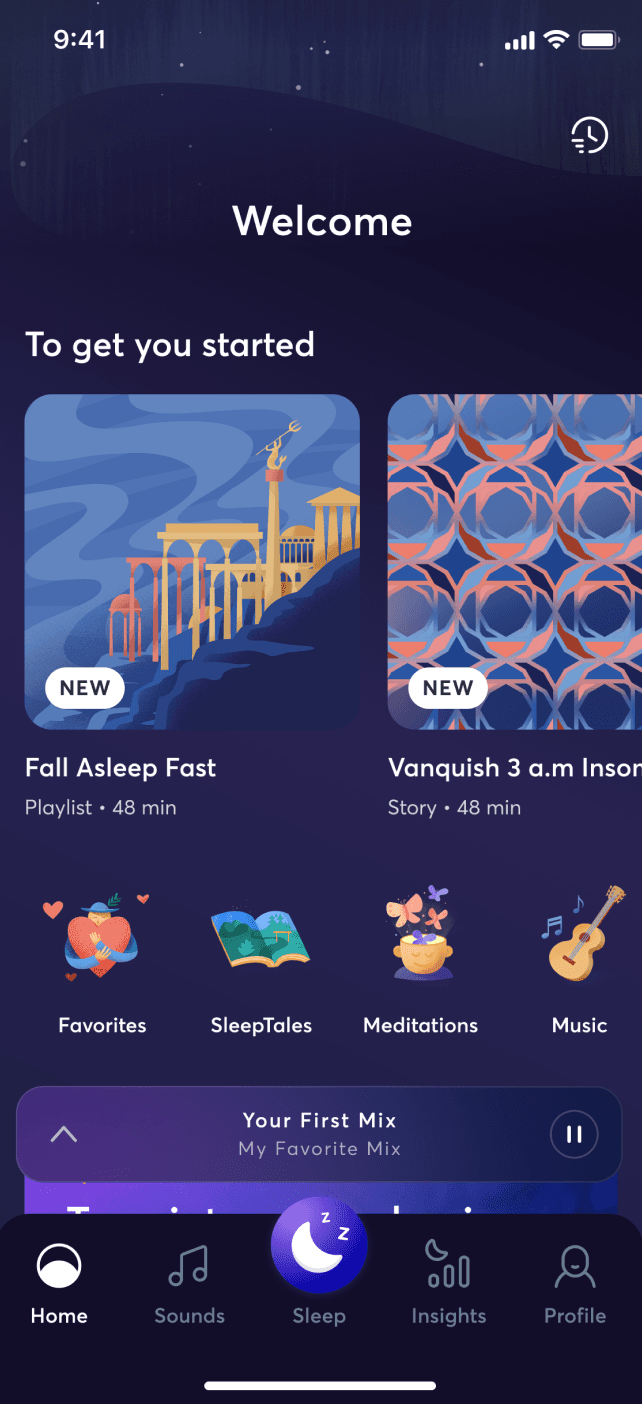
That's where BetterSleep fits.
The app doesn't replace medical care or prescription treatment. Instead, it supports the behavioral foundation that helps healthy sleep become more consistent over time.
The Bottom Line
Most sleep peptides are still searching for convincing clinical evidence.
Orexin antagonists are different.
They show what can happen when decades of basic neuroscience are followed by rigorous clinical trials, careful safety evaluation, and regulatory review. Rather than becoming another experimental peptide, orexin research produced an evidence-based class of prescription medications that genuinely helps many people with insomnia.
For anyone considering one of these medications, the next step isn't ordering a peptide online—it's having an informed conversation with a healthcare professional. And whether medication becomes part of the plan or not, healthy sleep habits remain the foundation of long-term sleep health.
Frequently Asked Questions
How do orexin antagonists work?
Orexin antagonists block orexin, a peptide your brain uses to maintain wakefulness. Instead of broadly sedating the brain like many older sleeping pills, they reduce the "stay awake" signal, making it easier for sleep to begin and continue naturally. The currently approved medications are dual orexin receptor antagonists (DORAs), meaning they block both known orexin receptors.
Do orexin antagonists actually work for insomnia?
Yes. Large randomized clinical trials and multiple meta-analyses consistently show that orexin antagonists help people fall asleep sooner, spend less time awake during the night, and sleep longer than placebo. No single medication has clearly proved superior across every outcome, but the class as a whole has strong evidence supporting its effectiveness.
Are orexin antagonists addictive?
Current evidence suggests they have a lower risk of dependence, tolerance, and rebound insomnia than many older prescription sleeping pills. However, that doesn't mean they're risk-free. They're prescription medications with potential side effects, and researchers continue to study their long-term use in broader patient populations.
Are orexin antagonists better than CBT-I?
They serve different purposes. For chronic insomnia, CBT-I remains the recommended first-line treatment because it addresses the underlying behaviors and thought patterns that contribute to poor sleep and sleep anxiety. An orexin antagonist may be added when appropriate by a healthcare provider, while healthy sleep habits and a consistent bedtime routine continue to support better long-term sleep.